
Health cover explained: are skin checks covered by medicare?
On this page
- Are skin checks covered by Medicare?
- Where to get a skin check: GP, skin cancer clinics and dermatologists
- Does private health cover skin checks?
- Why you should think about getting a skin check
Are skin checks covered by Medicare?
That depends on a range of factors. Medicare may offer a rebate for skin checks performed by a GP, but not all GP clinics bulk bill.
Other factors that may impact this include;
- The nature of the appointment
- Any procedures required such as biopsies or ecisions
- Whether you're seeing a GP or Dermatologist
Where to get a skin check: GP, skin cancer clinics or dermatologists?
Medicare can help cover some of the costs at skin cancer clinics and Dermatologists.
However it's important to note that Melanoma Institute Australia (MIA) advises to see your GP first for skin checks because GPs are medically trained to make diagnosis on anything suspicious, and will refer you to a specialist, such as a Dermatologist, if required.
A Dermatologist is a doctor with significant additional training that specialises in diagnosing and treating skin diseases, which includes skin cancer.
This approach shortens the time from diagnosis to intervention, which is extremely important.
MIA also suggests seeing your GP because they are familiar with your history, can talk to you about risk factors and family history, and treat some skin cancers.
Does private health cover skin checks?
If your skin check appointment is with a GP, dermatologist or at a skin cancer clinic, private health insurers like Police Health can't cover it.
It's because these appointments are outpatient services, which private health insurers aren't allowed to cover.
For a further more detailed explanation, read our guide to inpatient vs outpatient.
Private skin check clinics
In recent years more private clinics specialising in skin checks have begun to pop up.
These clinics offer a variety of services and fee arrangements, and have differing levels of expertise.
The Cancer Council warns that before deciding to go to a skin clinic, it’s important to find out about the services offered and the expertise of the employees.
Because of the inconsistent nature of these such skin clinics, and advice that initial skin checks are best done by your GP,
Police Health does not pay benefits towards consults at skin clinics.
Instead, we urge members to see their GP for a skin check, and ask whether a surveillance and management plan is recommended based on your individual risk factors.
Why you should think about getting a skin check
Many police are at greater risk of skin cancer given their jobs see them outdoors in the Aussie sun more often, so regular skin checks play a crucial role in prevention by aiding in the early detection of skin cancer and other dermatological issues.
Skin cancer, including melanoma, is a common and potentially deadly condition, especially in countries with high sun exposure like Australia.
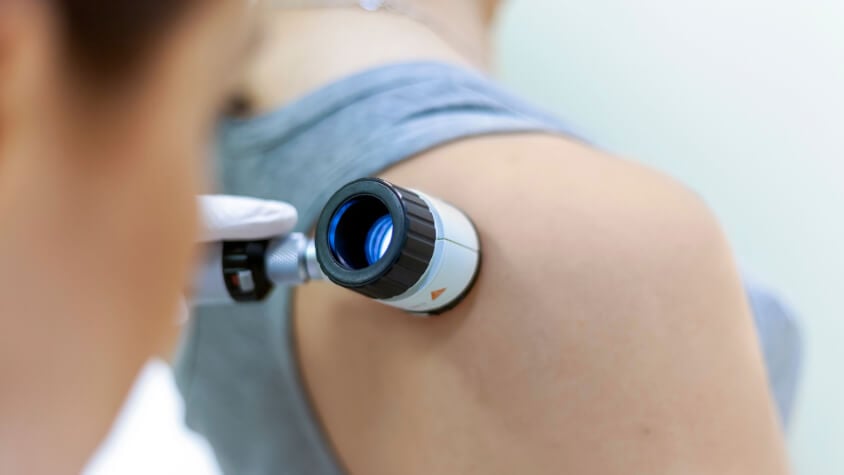
Skin checks allow healthcare professionals to identify suspicious moles, lesions, or abnormalities that might indicate the presence of skin cancer.
Early detection enables timely treatment, significantly increasing the chances of successful outcomes and reducing the need for invasive interventions.
By undergoing routine skin checks, individuals can proactively safeguard their health, reduce the risk of skin cancer, and ensure their long-term well-being.
Learn more about health cover and how Police Health can help